

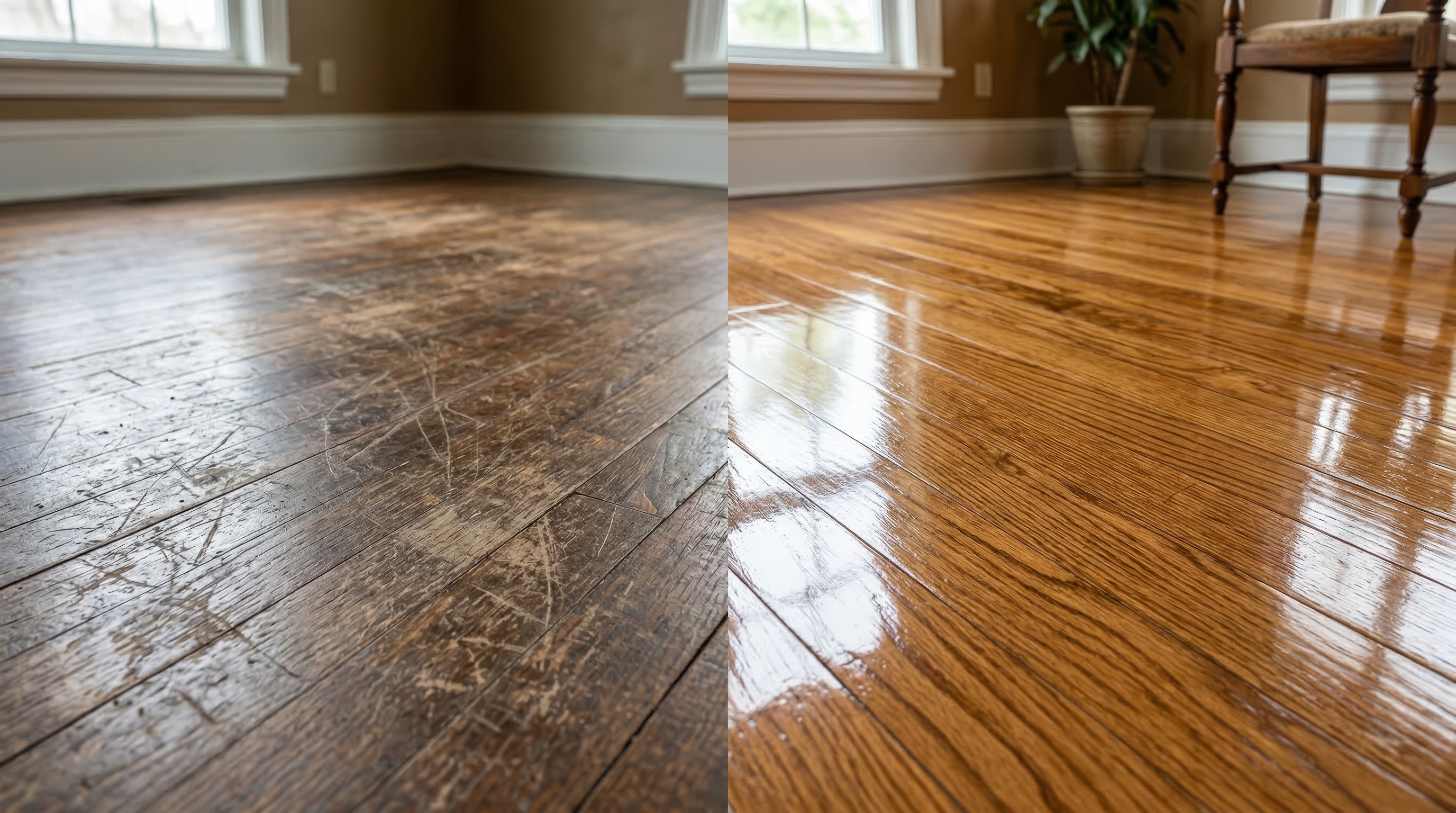
When hardwood floors begin to look worn, homeowners often face a difficult question: should the existing floor be refinished, or is it time to replace it? Scratches, faded finish, dull areas, and years of foot traffic can make wood appear tired, but not every surface that looks worn has reached the end of its useful life. In many cases, the condition of the wood beneath the finish matters more than the appearance of the surface alone.
For homeowners in Colorado Springs, Pueblo, and Castle Rock, deciding whether to refinish or replace hardwood involves evaluating the floor's construction, thickness, stability, moisture history, and the type of damage present. The right choice can preserve the character of an existing home or provide an opportunity to change the flooring to suit a new layout or design.
Understanding the difference between surface wear and deeper damage helps you have a more informed conversation with a flooring professional before committing to a major renovation.
Start by Identifying What Has Actually Worn Out
Hardwood floors have several layers of character and protection. The visible finish helps protect the wood from everyday wear, while the wood itself provides the color, grain, and texture that make each floor distinctive. Over time, the finish may become scratched, dull, or uneven, even when the underlying boards remain in good condition.
Surface-level wear may include fine scratches, scuff marks, dull traffic lanes, or a finish that has lost its original sheen. Depending on the product and the severity of the wear, refinishing may restore the appearance without requiring the floor to be replaced.
Deeper problems require a closer look. Boards that are badly split, severely cupped, loose, extensively stained, or damaged by moisture may need repairs or replacement. In some cases, the floor may have both surface wear and structural or moisture-related concerns, meaning refinishing alone would not resolve the issue.
Before choosing a solution, inspect the floor in natural light and note the locations of the most noticeable changes. Look for areas near windows, exterior doors, sinks, appliances, and other places where sunlight or moisture may have affected the wood. The pattern of wear can help guide the assessment, although it does not establish the cause by itself.
What Does Refinishing Actually Involve?
Refinishing generally involves preparing the existing wood surface and applying a new finish. Depending on the floor's condition and the chosen finish system, the process may include sanding, repairing selected areas, staining, and applying protective coats. The objective is to renew the surface while retaining the existing wood flooring.
Refinishing can be appealing when the boards remain structurally sound and have enough usable wood to support the work. It may allow homeowners to update the color, change the sheen, or restore a more consistent appearance while preserving the original material.
However, refinishing is not suitable for every wood floor. The amount of material that can safely be removed depends on the floor's construction and remaining thickness. Some engineered hardwood products have a relatively thin real-wood wear layer, while solid hardwood may offer more material for future refinishing, depending on its dimensions and previous work.
Ask the flooring professional to identify the type of floor and evaluate its remaining wear layer before sanding is recommended. Repeated refinishing can reduce the amount of wood available for future work, so the decision should be based on the floor's actual condition rather than a general assumption that all hardwood can be sanded the same number of times.
When Replacement May Be the Better Option
Replacement may be appropriate when the existing boards are extensively damaged, the floor has been refinished as far as its construction safely allows, or the current material no longer suits the home's needs. Severe moisture damage, widespread instability, or significant changes to the floor plan may also make replacement worth considering.
Another reason to replace hardwood is the desire to change the overall design. Homeowners may want wider planks, a different wood species, a new finish, or a floor that coordinates with a renovated kitchen or living area. If the existing flooring cannot reasonably achieve the desired appearance, replacement can provide more design flexibility.
Replacement does not automatically solve every underlying issue. Before installing new material, the substrate and any moisture concerns should be evaluated. If the existing floor has moved because of an unstable subfloor or unsuitable moisture conditions, those problems need to be addressed before new flooring is installed.
Removing the existing floor may also reveal conditions that were previously hidden, such as damaged subfloor sections, old adhesive, or uneven surfaces. A clear estimate should explain what preparation is included and how unexpected conditions will be handled.
Understand the Difference Between Solid and Engineered Hardwood
Solid hardwood is made from a single piece of wood, while engineered hardwood typically has a real-wood surface bonded to a layered core. This construction difference affects how the floor responds to moisture and how much material may be available for refinishing.
Solid hardwood can often be refinished multiple times, but the number depends on the thickness, profile, and previous sanding history. A solid floor with substantial wear may still be a good candidate for refinishing, while one with deep damage or insufficient remaining thickness may require another solution.
Engineered hardwood can also be refinished when the product has a suitable wear layer and the manufacturer permits it. However, the available sanding depth varies considerably between products. Some engineered floors are designed primarily for surface maintenance rather than repeated full sanding.
If you do not know which type of floor is installed, do not assume that its appearance reveals the construction. The flooring specialist may be able to identify it by inspecting an exposed edge, a transition, or other accessible areas. Product records, if available, can also help establish the correct maintenance and repair options.
How Moisture and Colorado's Indoor Climate Affect the Decision
Wood flooring responds to changes in moisture content. During dry periods, boards may contract and gaps may become more visible. When humidity rises, wood can absorb moisture and expand. The degree of movement depends on the species, construction, plank dimensions, installation, and indoor conditions.
Colorado's dry winter air can make seasonal changes particularly noticeable. Small gaps that appear during a dry season may be a normal response to the environment, but pronounced gaps, distortion, splitting, or persistent changes should be assessed before refinishing or replacement is considered.
Refinishing will not correct an unresolved moisture problem. If the floor has cupped, crowned, or developed unusual gaps because of moisture conditions, the cause needs to be investigated. Applying a new finish without addressing the underlying issue may leave the original problem in place.
Indoor humidity should be managed according to the flooring manufacturer's recommendations. Adding excessive moisture can create its own problems, so the objective is a reasonably stable environment rather than forcing the home to an arbitrary humidity level. If the floor has experienced a leak or water intrusion, that history should be shared with the flooring professional.
Compare the Cost and Disruption of Both Options
Refinishing and replacement involve different kinds of work, so the best comparison is based on the actual scope of the project. Refinishing may involve sanding, dust control, stain selection, finishing coats, and time for the finish to cure. Replacement may involve demolition, disposal, subfloor preparation, new materials, installation, and transitions.
The condition of the existing floor can influence the cost of refinishing. Extensive repairs, difficult layouts, multiple finish layers, or the need to address moisture-related damage can increase the amount of work. Likewise, replacement costs depend on the selected product, the size of the area, removal requirements, and any necessary substrate preparation.
Ask for estimates that clearly describe the work included. A refinishing estimate should explain the expected surface preparation and finish system. A replacement estimate should identify the flooring product, removal and disposal requirements, subfloor preparation, installation method, and finishing details.
Disruption matters as well. Refinishing can make rooms unavailable during sanding and finishing, and the finish may need a specified curing period before furniture is returned. Replacement may involve additional demolition and installation time. Follow the contractor's and product manufacturer's instructions about ventilation, access, curing, and when normal use can resume.
Think About the Look You Want to Achieve
One advantage of refinishing is the opportunity to refresh the appearance of an existing wood floor. Depending on the species and condition, homeowners may be able to choose a different stain or sheen while retaining the grain and character of the original boards. This can be particularly appealing in older homes where the existing floor contributes to the property's personality.
However, not every color change is achievable on every floor. The wood species, existing stain, previous finish, and condition of the boards all influence the final result. Darkening a floor or trying to remove a previous color may require more extensive preparation, and samples should be reviewed before the entire floor is treated.
Replacement offers a broader range of choices in plank width, species, construction, texture, and finish. Homeowners can select a floor that coordinates with new cabinetry, paint, furniture, and other renovations. Wide planks and natural-looking finishes can create a different visual effect from traditional narrow boards.
When choosing a new floor, consider how the design will work throughout the home rather than focusing only on a single room. The relationship between flooring, natural light, wall color, and adjoining spaces can make the finished interior feel more cohesive.
What About Scratches, Dents, and Pet Damage?
Scratches and dents do not always mean the floor must be replaced. Fine surface scratches may be addressed during refinishing, depending on their depth and the condition of the wood. Deeper dents, broken edges, or damaged individual boards may require localized repairs before the surface is renewed.
Pet-related wear can vary from surface marks to deeper damage. If the finish is worn but the wood remains sound, refinishing may be an option. If damage extends through the boards or affects a large area, replacement or selective board repair may be more appropriate.
Water-related stains deserve special attention. Some discoloration may remain after sanding, and stains that extend deeply into the wood may not be fully removable. A flooring professional can assess whether a repair, a different stain approach, or replacement is likely to provide the best result.
Be realistic about the expected outcome. Refinishing can improve the appearance of a floor, but it cannot always make old wood look exactly like new material. The grain, knots, color variation, and marks accumulated over the years are part of the floor's character and may remain visible to some degree.
Get a Professional Assessment Before Committing
The decision to refinish or replace should follow an evaluation of the existing floor, not simply its age or appearance. The assessment should consider the wood construction, remaining thickness, damage, moisture history, subfloor condition, and the appearance you want to achieve.
If the floor is structurally sound and the main issue is surface wear, refinishing may be a practical way to extend its useful life. If the boards are extensively damaged, have limited remaining wear material, or no longer suit the home's needs, replacement may be the better investment.
Ask questions about the expected results, preparation requirements, disruption, maintenance, and warranty coverage. A clear explanation of the options helps you compare the likely benefits of each approach and avoid spending money on a treatment that cannot resolve the underlying problem.
Make the Right Decision for Your Hardwood Floors
Existing hardwood may have more life left in it than its worn finish suggests, but some floors need more than a cosmetic refresh. By evaluating the wood's construction, the depth of the damage, moisture conditions, and your design goals, you can decide whether refinishing, targeted repair, or replacement is the most suitable path forward.
Hardwood Flooring Specialist helps homeowners in Colorado Springs, Pueblo, and Castle Rock explore wood flooring options for renovations and new installations. Browse the hardwood flooring collection to compare styles and finishes, then contact the team to discuss the condition of your existing floor and request an assessment. Whether you want to preserve the character of your current hardwood or plan a fresh start, a careful evaluation can help you choose the option that best fits your home.



