

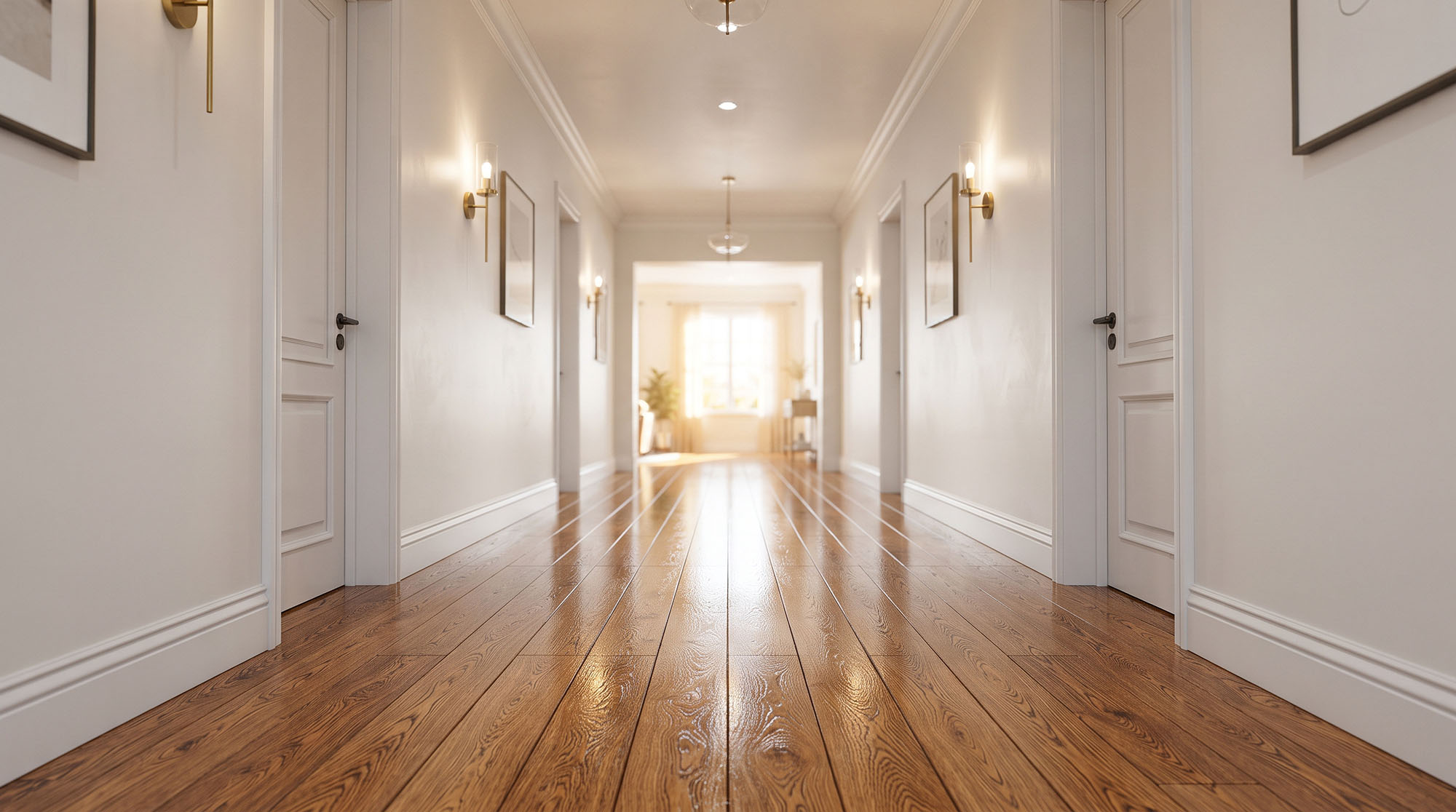
Hardwood flooring brings natural character to a home, but unlike manufactured surfaces, real wood continues to respond to the environment around it. In Colorado, where indoor humidity can drop significantly during the heating season, homeowners may notice small gaps appearing between boards, changes in the way the floor feels underfoot, or subtle shifts in the appearance of the wood. These changes can be surprising, especially when the flooring looked perfectly uniform during warmer months.
For homeowners in Colorado Springs, Pueblo, and Castle Rock, understanding the relationship between hardwood and indoor humidity is an important part of protecting a wood floor. Seasonal movement is a natural characteristic of wood, but excessive changes in moisture conditions can contribute to more noticeable gaps, cracks, or other concerns. The key is knowing what may be normal, what deserves professional attention, and how to create a more stable indoor environment.
Why Wood Floors Respond to Colorado's Climate
Wood is hygroscopic, which means it exchanges moisture with the surrounding air. When relative humidity rises, wood can absorb moisture and expand. When the air becomes drier, wood releases moisture and contracts. This movement occurs even after the flooring has been manufactured, finished, and installed.
Colorado's climate can make these changes particularly noticeable. Cold outdoor air contains relatively little moisture, and when it enters a home and is heated, its relative humidity can fall. Furnaces and other heating systems can contribute to a dry indoor environment during winter, especially when the home has limited humidification.
As the moisture content of hardwood changes, boards may contract slightly and reveal narrow spaces between them. The amount of movement depends on the wood species, plank width, flooring construction, installation method, and the humidity conditions experienced by the home. Wider boards can show more noticeable seasonal movement than narrower boards because their dimensions respond across a larger width.
These changes do not automatically mean the floor was installed incorrectly. Some seasonal movement is expected in real wood. However, pronounced gaps, persistent distortion, cracking, or changes that continue to worsen should be assessed to determine whether the conditions are outside the flooring manufacturer's recommendations.
What Is the Difference Between Seasonal Gaps and a Flooring Problem?
Small, fairly consistent gaps that appear during a dry winter and become less noticeable when humidity rises may be related to normal seasonal movement. The floor is responding to a change in its environment, and the spaces between boards may vary throughout the year.
Other symptoms deserve closer attention. Large or irregular gaps, boards that lift at the edges, unusual cupping or crowning, splitting, or areas that feel unstable may point to more than ordinary seasonal contraction. Previous water exposure, a moisture problem beneath the floor, unsuitable indoor conditions, or installation issues may be involved.
The location and pattern of the changes can provide useful clues, but appearance alone cannot establish the cause. A flooring professional may need to inspect the boards, review the installation, and measure the indoor conditions before recommending a solution.
Avoid filling seasonal gaps immediately with a rigid filler simply because they are visible in winter. If the boards expand again during a more humid season, an unsuitable filler may compress, crack, or interfere with the floor's natural movement. The correct approach depends on the size of the gaps, the type of flooring, and whether the movement is seasonal or caused by another issue.
Why Indoor Humidity Matters More Than the Weather App
Outdoor temperature and humidity provide useful context, but hardwood responds most directly to the environment inside the home and to the moisture conditions of the floor itself. Two homes in the same Colorado neighborhood can experience different flooring behavior because of differences in heating, ventilation, insulation, humidification, and daily use.
Monitoring indoor relative humidity can help homeowners understand seasonal changes. A basic hygrometer provides a useful starting point, while a humidifier may help maintain more stable conditions when used appropriately. However, the target range should come from the flooring manufacturer's recommendations and any applicable building or equipment guidance. There is no single humidity setting that is ideal for every wood product or home.
Adding too much moisture can also create problems. A humidifier should not be used to force the home to an arbitrary reading, particularly if condensation appears on windows or other surfaces. Excess humidity can affect the building and may contribute to wood swelling. The goal is consistency within the appropriate range, not maximum humidity.
Homes with forced-air heating may benefit from having the heating and humidification systems checked if indoor air becomes unusually dry. A qualified HVAC professional can help assess the system and determine whether adjustments are appropriate. Flooring concerns should also be evaluated separately if the floor has already developed pronounced gaps or distortion.
How Acclimation Helps Before Installation
Acclimation is often misunderstood as simply leaving boxes of flooring in a room for a set number of days. In reality, the process depends on the flooring product, its construction, the installation method, and whether the building is operating under suitable conditions.
Solid hardwood, engineered hardwood, and other wood flooring products can have different moisture requirements. The installer should follow the manufacturer's instructions for storage, acclimation where required, moisture testing, and the acceptable conditions of the building before work begins.
The home should be sufficiently complete and maintained at the intended indoor temperature and humidity conditions before installation. If the flooring is installed while the building is unusually cold, damp, or dry, the material may later respond to the environment it encounters after the home returns to normal use.
Moisture measurements can also be important. Depending on the flooring and substrate, the installer may need to measure the moisture content of the wood, the concrete, or the wood subfloor. These checks help determine whether the materials and installation environment meet the manufacturer's requirements.
Acclimation cannot eliminate all seasonal movement. Its purpose is to help ensure the flooring is installed under appropriate conditions, reducing the likelihood of avoidable moisture-related problems.
Does Engineered Hardwood Move Less Than Solid Hardwood?
Engineered hardwood is constructed with a real wood surface bonded to a layered core. This construction is designed to improve dimensional stability compared with a solid plank of similar size, although performance varies by product. Engineered flooring can be a useful option in homes where seasonal changes in humidity need to be considered carefully.
Solid hardwood consists of a single piece of wood and responds to moisture changes across its structure. It can offer the appeal of traditional wood flooring and may be refinished multiple times, depending on its thickness and condition. Both types have advantages, and neither is immune to changes in moisture.
Choosing between them should involve more than the assumption that engineered wood never develops gaps or that solid wood is unsuitable for Colorado. The species, product construction, plank dimensions, subfloor, installation method, and indoor environment all influence performance.
If you are considering new hardwood, ask about the manufacturer's humidity requirements, the recommended installation method, and the product's suitability for the room and subfloor. A flooring specialist can help compare options based on the conditions of your home rather than relying on a broad rule that applies to every property.
Why Plank Width and Wood Species Matter
Not all hardwood floors respond in exactly the same way. Wood species have different characteristics, and individual boards can vary according to how the wood was cut and how the material was manufactured. Wider planks generally show more visible movement across their width than narrower planks when moisture conditions change.
This does not mean wider flooring should be avoided. Wide-plank hardwood can create a spacious, contemporary appearance and highlight the natural grain of the wood. It simply means that product selection and installation conditions deserve careful consideration, particularly in a dry climate.
Finish and color can also influence how seasonal gaps are perceived. Dark gaps between light-colored boards may be more visible, while strong grain variation can make small changes less obvious. These are visual considerations rather than substitutes for proper installation and humidity management.
When choosing a new floor, view samples in the room and ask about the product's construction and maintenance requirements. The most suitable option should balance appearance with the home's environmental conditions and the way the space will be used.
What to Do if Your Hardwood Floor Already Has Gaps
If gaps have appeared, start by documenting when you first noticed them and whether they change with the seasons. Check the indoor humidity, consider whether the heating system has recently been used more heavily, and look for other signs such as lifting boards, unusual noises, or discoloration.
Do not pour water onto the floor, use unapproved treatments, or attempt to force the boards together. Sudden changes in moisture can make the situation worse. Avoid applying filler or sealant until the cause and expected seasonal movement have been assessed.
If the gaps are substantial, irregular, or accompanied by other symptoms, arrange an inspection. The flooring professional may evaluate the indoor environment, subfloor conditions, installation details, and the wood itself. Depending on the findings, the appropriate response could involve environmental adjustments, a targeted repair, or a more extensive corrective measure.
Keep following the manufacturer's cleaning and maintenance guidance in the meantime. Regular dry cleaning removes grit that can scratch the finish, while prompt attention to spills helps prevent localized moisture damage.
Choose Hardwood With Colorado Conditions in Mind
Hardwood flooring can be a lasting and attractive part of a Colorado home when the product, installation, and indoor environment are considered together. Seasonal gaps are not always a sign of failure, but noticeable changes should never be dismissed without considering their cause. Consistent indoor conditions, proper installation preparation, and realistic product selection can all help support long-term performance.
Hardwood Flooring Specialist helps homeowners explore wood flooring options for properties in Colorado Springs, Pueblo, and Castle Rock. Browse the hardwood flooring collection to compare available styles and constructions, then contact the team to discuss a new installation or concerns about an existing floor. A careful assessment can help you make an informed decision that respects both the natural character of hardwood and the conditions inside your home.



