

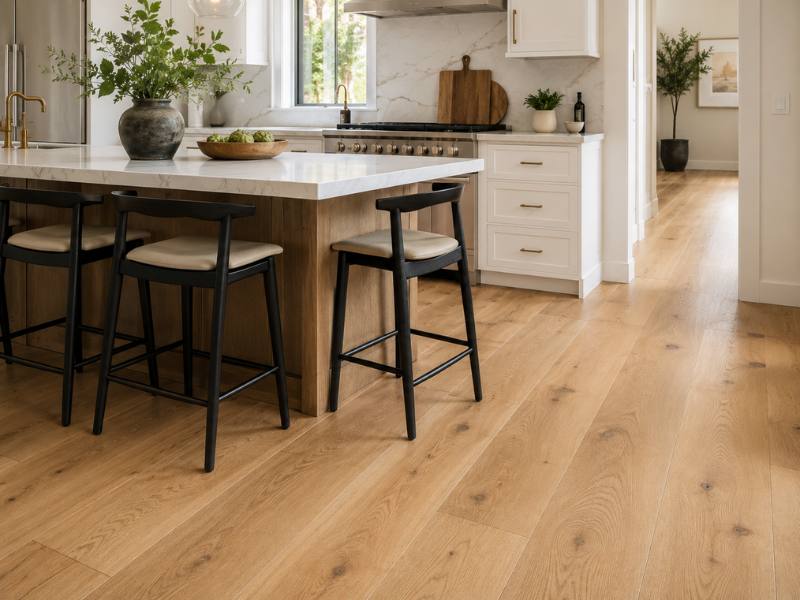
Few flooring choices change the visual character of a room as quickly as plank width. Two hardwood floors can use the same species, stain, and finish and still look completely different simply because one uses narrow boards and the other uses wide planks.
Wide-plank hardwood has become especially appealing to homeowners who want natural grain, fewer visual interruptions, and a more open architectural feel. In Colorado homes, the style also fits naturally with the connection between indoor spaces and the state's mountain-inspired design aesthetic.
But choosing wide plank is not simply a matter of selecting the widest board available. Room proportions, furniture, natural light, wood species, installation conditions, and the overall design of the home all affect how the floor will look once installed.
If you are comparing options, explore the hardwood flooring selection from Hardwood Flooring Specialist to see the range of styles available before deciding which direction fits your home.
Why Wide Planks Look So Different
A traditional narrow hardwood floor contains many individual boards across the width of a room. The numerous seams create a repeating rhythm that can make the floor feel detailed and traditional.
Wide planks reduce the number of boards required to cover the same area. That allows more of each individual board's grain, knots, color variation, and natural character to become visible.
The result is often a quieter and more architectural appearance. Instead of the floor reading as hundreds of individual strips, it can read more like a continuous natural surface.
Wide Planks Can Make a Room Feel Larger
One reason homeowners gravitate toward wider boards is the way they can influence the perception of space. Fewer seams create fewer visual interruptions, which can help an open room feel cleaner and more expansive.
This can work particularly well in Colorado homes with open living areas, large windows, high ceilings, or views toward the outdoors. The floor becomes a quiet foundation rather than a busy pattern competing with the architecture.
However, the effect depends on the room. A very wide plank in a tiny room may not necessarily create the same visual result as it does in a large open space. The proportions of the room and the scale of the furniture should always be considered together.
What Width Should You Choose?
There is no universal “correct” plank width. Narrower boards can create a classic and detailed appearance, while wider boards can create a more contemporary, relaxed, or high-end architectural feel.
The best width depends on the personality of the house. A historic home may benefit from a more traditional proportion, while a newer Colorado home with an open floor plan may suit a broader plank.
Furniture scale matters as well. Large sofas, substantial dining tables, oversized fireplaces, and open architectural spaces can support a wider floor visually. In smaller rooms with delicate furniture, a more moderate plank may provide better balance.
Natural Grain Becomes Part of the Design
Wide planks provide more surface area for the natural character of the wood to become visible. This makes species selection particularly important.
Oak can offer a distinctive grain pattern and broad range of natural color variations. Hickory can create a more pronounced and rustic appearance. Other species can produce different combinations of grain, color, and texture.
When choosing a wide plank, look at multiple boards rather than focusing on a single sample. Natural hardwood is not supposed to look perfectly identical from board to board. Variation is part of what makes the floor unique.
Matte Finishes Work Naturally With Wide Planks
High-gloss flooring reflects a significant amount of light and can draw attention to the surface itself. Lower-sheen finishes tend to create a more understated appearance, allowing the natural texture and grain of the wood to take priority.
This can be particularly effective with wide planks because there is already a large amount of visible wood character. A matte or satin appearance can keep the floor sophisticated without making it feel overly formal.
It can also fit naturally into Colorado interiors where stone, leather, wool, natural textiles, and other tactile materials are often used to create warmth.
Should Every Room Use the Same Width?
Homeowners often wonder whether changing plank width between rooms will make the house feel inconsistent. In many cases, maintaining the same primary flooring throughout connected spaces creates the strongest sense of continuity.
However, there is no requirement that every room in a home must use exactly the same flooring. Bedrooms, offices, basements, and other spaces can have different materials when there is a clear design reason.
Carpet, for example, can introduce softness in bedrooms while hardwood remains the primary material in living areas. The relationship between the materials becomes more important than forcing every room to look identical.
Wide Planks and Colorado's Dry Climate
Plank width should also be considered alongside Colorado's environmental conditions. Natural hardwood responds to changes in indoor moisture, and dry winter conditions can contribute to seasonal movement.
That makes proper product selection, acclimation, installation, and indoor environmental management especially important when choosing wider boards. The aesthetic appeal of a wide-plank floor should be matched by an installation approach appropriate for the specific home.
Homeowners should discuss these considerations with a flooring professional and follow the manufacturer's requirements for the specific product being installed.
Wide Planks Can Suit Both Rustic and Modern Homes
One of the strengths of wide-plank hardwood is its versatility. A heavily textured, naturally varied plank can complement a rustic Colorado interior with stone, exposed beams, leather, and natural textiles.
The same basic plank width can look completely different with a cleaner grade of wood, a lighter natural finish, and minimalist furniture. That makes plank width more of a structural design choice than a single decorating style.
Rather than asking whether wide plank is rustic or modern, consider the other decisions that will surround it.
Don't Choose From a Tiny Sample Alone
A small flooring sample cannot always communicate how a wide-plank floor will look across an entire room. The relationship between individual boards becomes much more visible when the flooring covers hundreds of square feet.
Look for larger displays when possible. Pay attention to the range of natural color, grain variation, knots, texture, and finish. Also consider how the floor will interact with cabinets, walls, countertops, fireplaces, furniture, and natural light.
The objective is to select a floor that looks good as an entire surface rather than simply choosing the most attractive individual board.
Make the Floor Part of the Architecture
The most successful wide-plank installations do not feel like an accessory added after the house was designed. They feel like part of the architecture.
Board direction, transitions, thresholds, stair connections, and room proportions all contribute to that effect. When these details are planned together, the hardwood can visually connect separate spaces and reinforce the home's overall structure.
Explore Wide-Plank Hardwood in Colorado
Wide-plank hardwood can give a Colorado home a natural, spacious, and sophisticated foundation, but the right choice depends on much more than plank width alone. Species, grade, finish, room scale, lighting, climate, and installation all deserve consideration.
Hardwood Flooring Specialist has showrooms in Colorado Springs, Pueblo, and Castle Rock where homeowners can explore hardwood options and compare different looks in person. Browse the hardwood flooring collection, then contact Hardwood Flooring Specialist to discuss your flooring project. The right plank width can do more than update a floor—it can change the way the entire room is perceived.



